LEADING AND LAGGING SAFETY INDICATORS - THE IMPORTANCE
WHY SAFETY KPIs MATTER
Most organisations only track injuries and incidents, but by the time something shows up there, the harm has already happened. A strong safety KPI framework also measures the actions and conditions that prevent harm in the first place, so teams can catch and correct problems before they become incidents.
TWO TYPES OF INDICATORS, ONE PICTURE
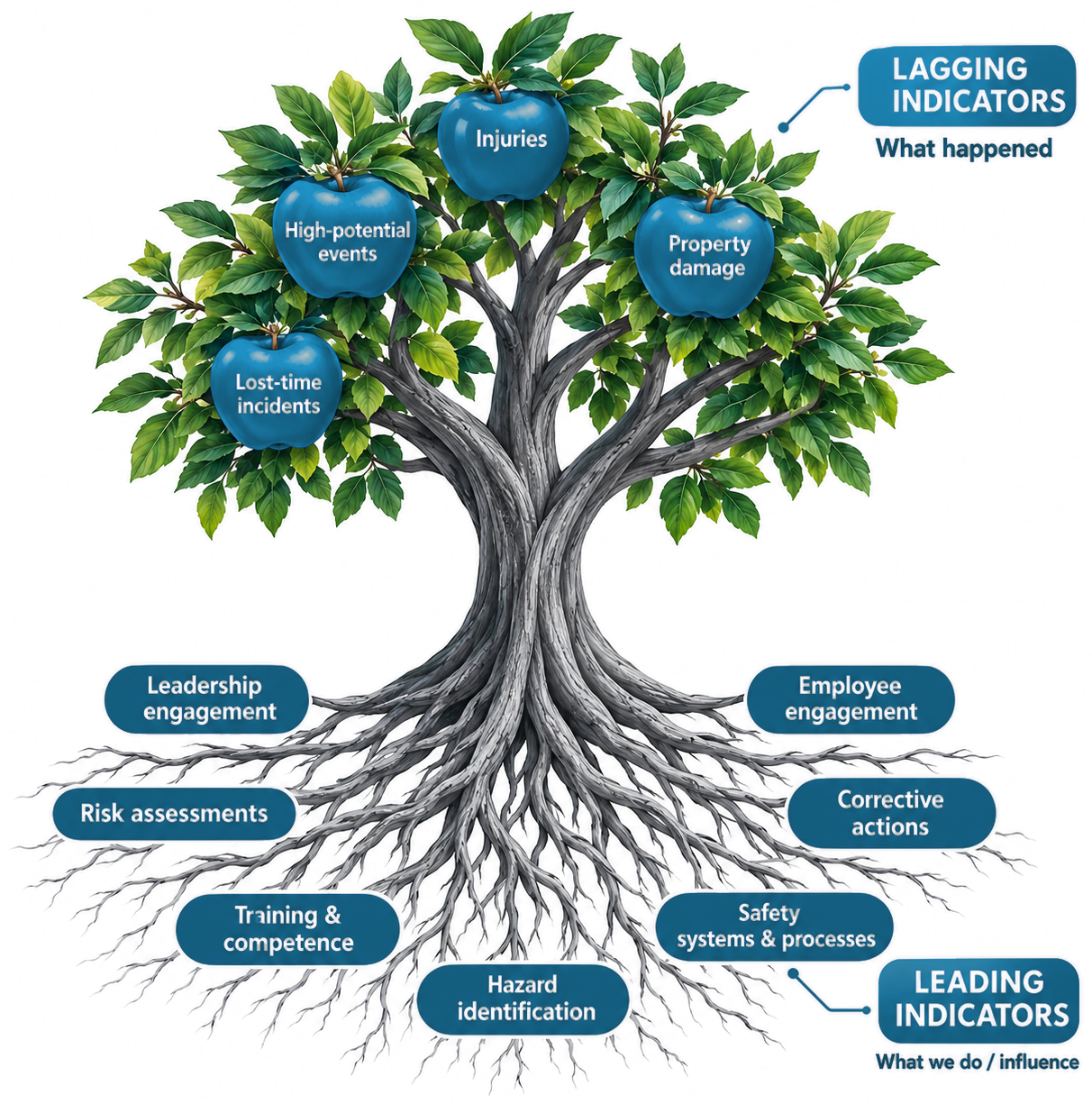
Leading indicators measure what you do and can influence, training, hazard identification, risk assessments. Lagging indicators measure what already happened, injuries, incidents, property damage. Neither on its own is enough: leading indicators drive improvement, lagging indicators confirm whether it worked.
WHAT GOOD SAFETY KPIS GIVE YOU
An early warning system — act on trends before they turn into incidents
A fair way to judge safety performance that doesn’t rely on luck (few injuries can mean good safety or just good luck)
Evidence for where to invest, training, systems, or leadership engagement
A clear story for management and employees about what’s improving and why
THE SAFETY INDICATOR TREE
Think of safety performance like a tree.
The roots are the leading indicators, training, hazard identification, risk assessments, engagement. They are the base and determine the quality of everything that grows above.
The fruit is the lagging indicators, injuries, incidents, property damage. The visible results.
Healthy roots are what ensures healthy fruits.